


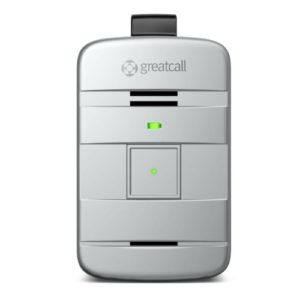

We set out to find the best medical alert system with GPS tracking through hands-on testing, and Aloe Care Health's Mobile Companion easily earned the title. It accurately marked our location on the mobile app, but the perks didn't stop there—we could toggle between satellite and road map views on its app and even export directions. Its audio was crystal-clear, and the monitoring center picked up in less than 40 seconds on average.
We're hard-pressed to find anything bad to say about it, but perhaps it's too large and bulky for some people. And it only works where there's AT&T cell coverage, so it may not track your location in some pockets of the country.
We've listed our runners-up for best medical alert systems with GPS to help you find the one that speaks to your style, budget, and cellular needs.
Best medical alert system with GPS
- : Best overall
- : Most portable
- : Best for Verizon coverage
- : Best add-ons
- : Best belt clip

Compare best GPS medical alert systems
|
Medical alert system
|
Best for
|
Starting monthly price
|
Equipment price
|
Automatic fall detection
|
Location technology type
|
Companion app
|
|
|---|---|---|---|---|---|---|---|
 |
Best overall | $24.99/mo. |
$99.99 |
Included |
GPS, Wi-Fi, 4G LTE |
 Yes Yes |
View Packages |
Medical Guardian Mini Guardian |
Most portable | $39.95/mo. |
$124.95 |
Additional $10/mo. |
GPS, Wi-Fi, 4G LTE |
Yes |
View Packages |
LifeFone At-Home and On-the-Go Pendant |
Best for Verizon coverage | $43.95/mo. |
$0.00 |
Additional $5/mo. |
4G LTE |
 No No |
View Packages |
Lively Mobile Plus |
Best add-ons | $19.99/mo. |
$49.99 |
Additional $20/mo. |
4G LTE |
Yes |
View Packages |
 |
Best belt clip | $29.95/mo. |
$79.00 |
Additional $10/mo. |
GPS, 4G LTE |
Yes |
View Packages |
Info current as of post date. Offers and availability may vary by location and are subject to change.
1: Aloe Care Health Mobile Companion: Best GPS medical alert
Aloe Care Health's Mobile Companion is budget-friendly to begin with, but it's also the only device on our list that comes with automatic fall detection at no extra charge. You get a lot of value for a $100 up-front fee and about $25 per month.
 Accurate location tracking Excellent audio quality Affordable
 Bulky
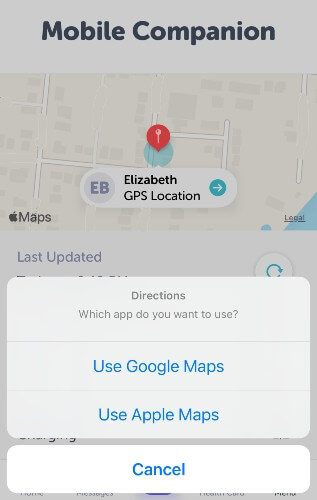
BulkyAloe Care's caregiver app is our favorite
Screenshot: Cathy Habas, SafeWise
When you're confused, lost, or unresponsive, it's critical that your loved ones and caregivers know where to find you. Of all the GPS medical alert devices and apps that we tested, the Aloe Care Health app gave us the greatest confidence in finding our loved one thanks to the ability to export directions to Google Maps or Apple Maps.
(Note that we removed the street names from our screenshots for privacy, but you'll be able to see them on the app.)
Aloe Care Health is also unique in that caregivers can initiate a three-way call with the monitoring center. Loved ones also get real-time push notifications whenever the help button is pressed, allowing them to stay up-to-date on what's happening and what kind of action the monitoring center has taken.
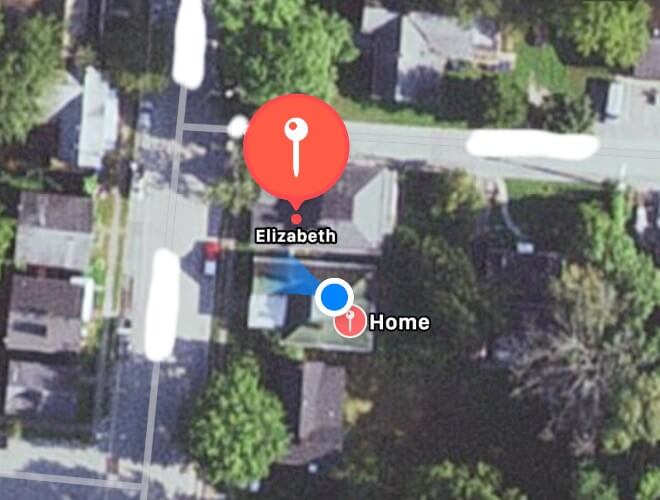
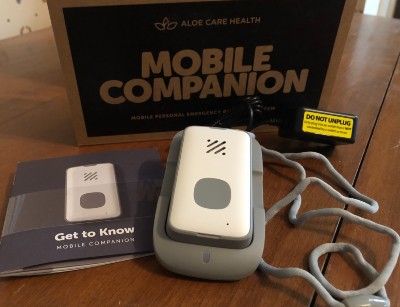
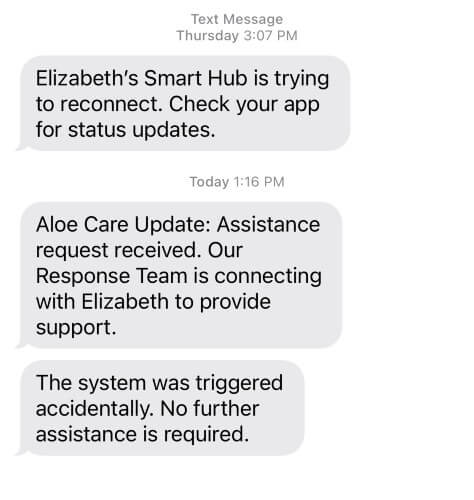
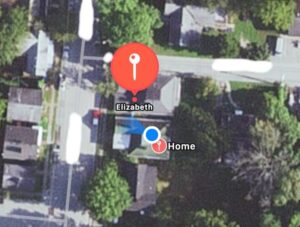
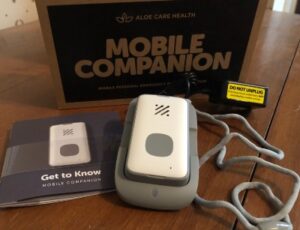
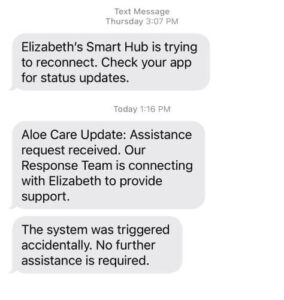
Images and screenshots: Cathy Habas, SafeWise
A bit bulky compared to other GPS devices
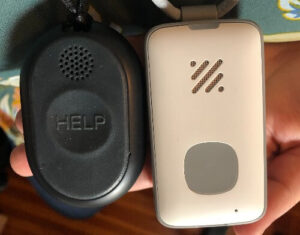
Image: Cathy Habas, SafeWise
The only room for improvement we see in the Aloe Care Health Mobile Companion is in regard to its size and weight. You definitely feel this device hanging from your neck. It's also tough to tuck under a blouse or sweater without creating an odd silhouette.
To put this into perspective, check out our comparison image, which shows the Mobile Companion next to another bulky device, the Bay Alarm Mobile GPS unit. You can see that the Mobile Companion is larger.
Learn more in our full Aloe Care Health Review.
2. Medical Guardian Mini Guardian: Most portable
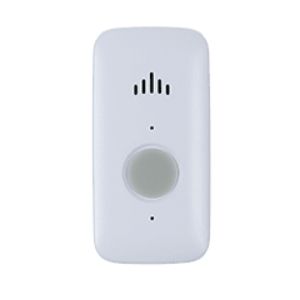
The Medical Guardian’s newest GPS alert device is portable, simple, and accessible. About the size of a domino, this medical alert device with GPS can clip onto your belt, purse, or bag. Or you can wear it around your neck as a lanyard.
Like the Aloe Care Mobile Companion, it comes with multiple forms of location technology. With Wi-Fi, 4G, and GPS tracking on your side, first responders and family can find you whenever you call for help.
Compact design Accessibility features Multiple location technologies
Higher equipment costThe Mini Guardian is our favorite mobile device from Medical Guardian
The Mini Guardian is only one of three Medical Guardian GPS alert systems. It costs the same as the two-piece Mobile Guardian system and a little less than the Active Guardian.
- Mini Guardian: $33.95/mo.
- Mobile Guardian: $33.95/mo.
- Active Guardian: $44.95/mo.
Like the Active Guardian, the Mini Guardian is a single device with all its tracking features built into its pint-sized design. While the Mobile Guardian is a dual system made of a GPS base unit and a wearable medical alert button. The Mobile Guardian is subtle, but you’ll need to carry two pieces with you at all times for it to work.
Mini Guardian accessibility features
The Mini Guardian has its fair share of accessibility features too. The single call button on its small body takes up most of the real estate, making it a good fit for those with dexterity issues.
When you press the help button, its loud 78 dB speaker and noise-canceling technology make it easier for those with hearing impairments to speak and listen to the operator on the other side.
Medical Guardian’s staff also has multilingual service for older adults who aren’t English speakers. Top it all off with 5-day battery life, charging reminders, and a companion app to keep your loved ones informed.

Medical Guardian has in-home products and other GPS medical alert devices to check out. Read our Medical Guardian review to see them all.
You can also learn more about Medical Guardian from our best medical alert bracelets review.
3. LifeFone At-Home and On-the-Go Pendant: Best for Verizon coverage
Most mobile medical alert devices operate on the AT&T 4G LTE network. If you live in an area that gets Verizon coverage instead, try the LifeFone At-Home and On-the-Go pendant.
You don’t need to be a customer of Verizon or AT&T to get the pendant. Just choose which service has better coverage in your area.
Free equipment Lower automatic-fall-detection fee Free device-location-finder feature
No companion appLifeFone's monthly monitoring fee is on the pricey side, but the equipment is free. There are no extra fees; just $43.95 per month for the monitoring service. You can knock that price down by opting for an annual subscription ($36.52 per month) or a quarterly subscription ($41.95 per month). But those payments will come in a higher lump sum.
This mobile medical alert pendant doesn’t offer a companion app, but you can opt for a free texting service to notify your loved ones when you’ve called for help.
Learn more in our full LifeFone review.
4. Lively Mobile Plus: Best add-ons

The Lively Mobile Plus (formerly GreatCall) GPS medical alert is similar to the others on our list, but its special add-on features make it stand out. With a subscription to Lively’s higher-tier plans, you can get access to features like a doctor on call and fall detection.
The Urgent Care service through Lively connects you with a licensed doctor or nurse for prescriptions or medical questions. While Lively Link is the companion app that keeps your family and loved ones in the know. When you press your emergency button, they’ll be notified through the app and come to your assistance.
Able to connect to doctors and nurses Available in stores
Best features cost extraAnd while the best features cost extra, the top plan with Lively costs under $40 per month. You can even check out this mobile device at brick-and-mortar stores like Walgreens and Rite Aid in your area so you can see it for yourself.
The Lively Mobile Plus comes from the same medical alert company that created the Jitterbug phone, so we trust them when it comes to designing intuitive tech for older adults. Plus, the Lively Mobile Plus made our top choice for best medical alert necklaces.

We take a closer look at the Lively Mobile Plus and Lively Wearable in our Lively (formerly GreatCall) review. You can also learn more about the Jitterbug phones from our full review.
5. Bay Alarm Medical GPS Mobile Help Button: Best belt clip
There's nothing terrible about the Bay Alarm Medical GPS Mobile Help Button, but it also doesn't have stand-out features. It costs a little less out-of-pocket compared to the Aloe Care Health Mobile Companion, but you'll pay about $5 more each month to monitor this Bay Alarm Medical device.
And that doesn't even include fall detection, which bumps the monthly price up to nearly $40.
Accurate location tracking 3-day battery life Free caregiver app
Plain maps Long answer timeHow the Bay Alarm Mobile GPS Button performed during testing
Screenshot: Cathy Habas, SafeWise
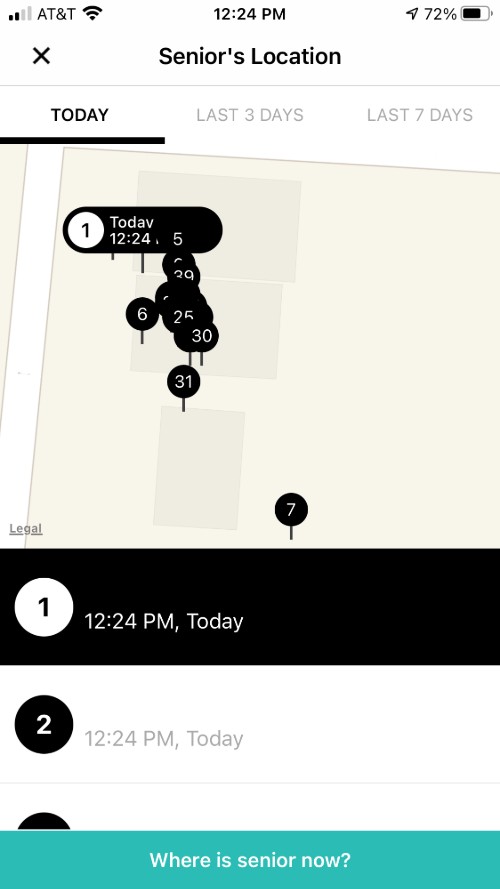
It accurately pinpointed our location during tests, but we weren't impressed by the plain-looking maps on the caregiver app. Without a satellite view, it was hard to tell if our tester was in the middle of a field, at someone's home, or lost in a parking lot.
And when we tried to zoom out to get a broader perspective on their location, the app automatically zoomed in again.
It also took nearly 2 minutes for the monitoring center to answer our call during one of our tests. You can see that in action in our video review on YouTube.
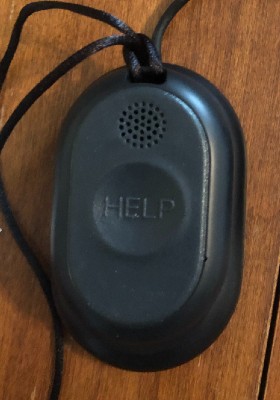
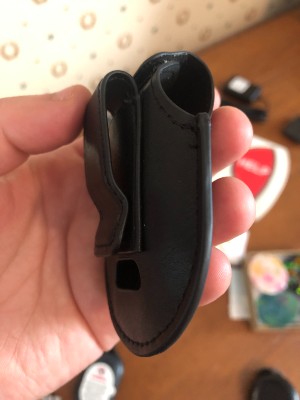
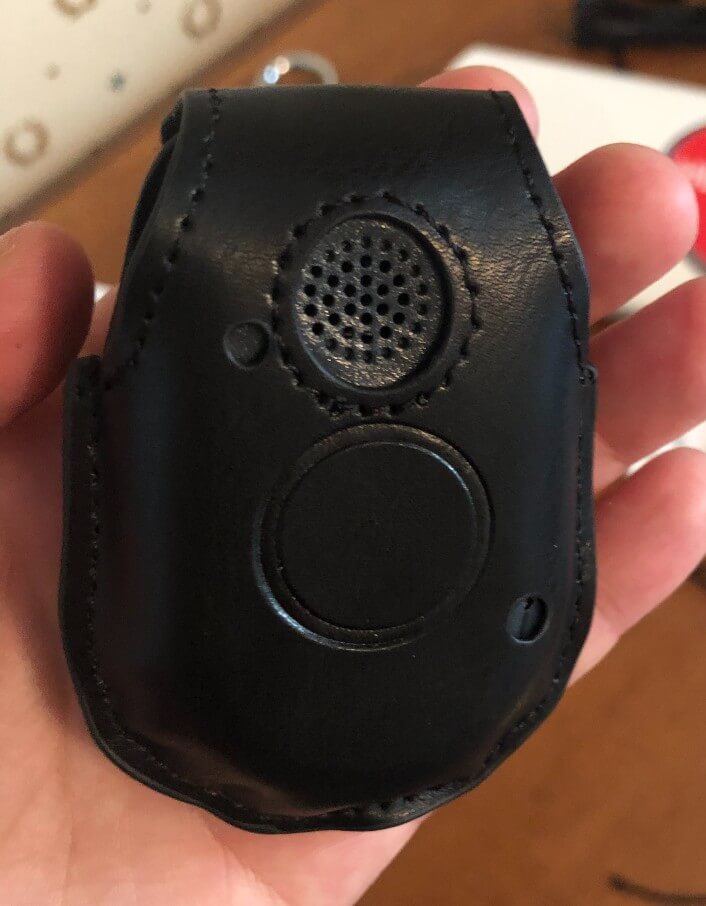
With all of that said, the Bay Alarm Medical GPS device is one of the few that looks great when clipped onto your belt. Its all-black design is unobtrusive, so no one will know you're sporting a medical alert device. Plus, the belt clip is included for free.

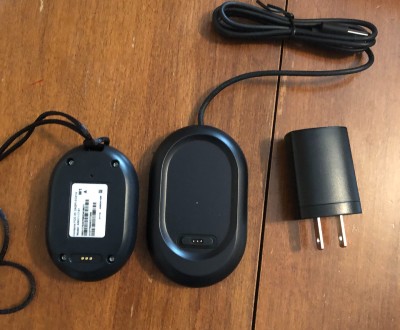
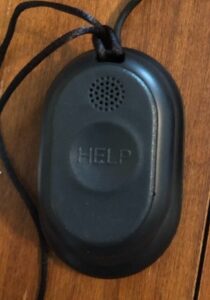
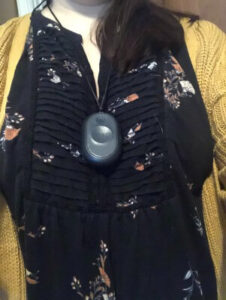
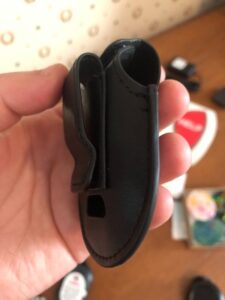
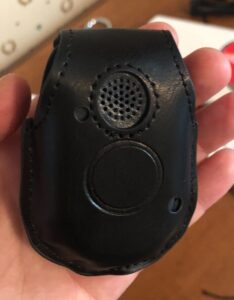
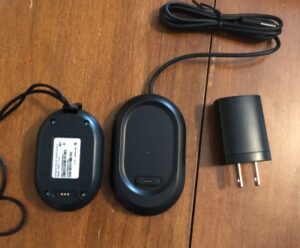
Images: Cathy Habas, SafeWise
To learn more about Bay Alarm Medical alert systems, read our full review.
Other medical alert devices we considered
Philips GoSafe 2: No caregiver tracking

The GoSafe 2 pendant from Philips Lifeline is compact, powerful, and simple to use. There's just one catch: your loved ones and caregivers can't track your location with the medical alert device. That info is only shared with the professional monitoring center when you call for help.
Five types of location technology Automatic fall detection built in Simple help button design
Expensive monthly cost Self-installation fee No caregiver tracking
- A-GPS: Assisted GPS connects to satellites above to pinpoint your location
- Wi-Fi: The GoSafe 2 connects to nearby Wi-Fi networks, keeping you online and easy to reach.
- Breadcrumbs: Just like in Hansel and Gretel, your GoSafe 2 leaves a trail of location snapshots wherever you go. So first responders can follow the trail of data right to you.
- Two-way talk: This feature is an intercom function that lets you speak to the monitoring pros from Philips when you need assistance.
- Audio beacon: If you’re in a more remote area, set off the audio beacon to help others find you.
Learn more in our full Philips Lifeline review.
Bay Alarm Medical In-Car Medical Alert: No longer available

We loved the one-of-a-kind In-Car Medical Alert from Bay Alarm Medical. Sadly, it went kaput with the 3G Sunset.
It was a great device for people with the early stages of dementia because it stayed in the car at all times—no need to remember a device or to even worry about charging it. It also included collision alerts and a panic button.
We'll let you know if Bay Alarm Medical releases this device on 4G or 5G networks. For now, consider a basic vehicle GPS tracker.
Final word
If you’re an active older adult, choosing a medical alert system with GPS keeps help closeby without limiting your mobility. Your loved ones will feel better knowing that you have access to emergency services with the press of a button.
The Philips GoSafe 2 does all of that plus included automatic fall detection in a comfortable wearable pendant.
How we reviewed the best GPS medical alert devices
The best medical alert system with GPS should give you the freedom to do the things you enjoy the most in and out of your home.
We weighed our options by looking at each candidate’s location technologies, companion apps, and automatic fall detection—then we sought out affordable prices on top of these features. We tested Aloe Care Health and Bay Alarm Medical equipment hands-on.
Keep these priorities in mind as you choose what works best for you:
- The GPS medical alert systems with strong location technology bring help to you faster.
- A companion app shares your location with loved ones who can come help you.
- Automatic fall detection sends for help if you fall down or lose consciousness after a fall.
See our methodology to learn more about how we reviewed this and all our other medical alert system reviews.
Mobile medical alert system FAQ
A GPS medical alert system pairs location technology like GPS tracking with a medical alert system that connects to a monitoring center. The medical alert device uses cellular signals like your smartphone to pinpoint your location.
When you press the medical alert button, it sends your location to monitoring professionals who can share your information with emergency responders.
Devices with automatic fall detection call for help as soon as they detect a fall by using built in instruments inside that measure height, speed, and pressure.
If you take a spill and are knocked unconscious, the professional monitoring center will receive an automatic medical care alert. They'll try to talk to you through the alert button's speaker. If you don't respond, the center shares your location with emergency responders so you can get prompt medical attention.
A medical alert system is an electronic device that uses a landline or cellular signal to connect to a monitoring center. It can be used as a panic button in emergencies to call for help. A medical ID bracelet is a piece of jewelry designed to identify conditions you have or others of medications you take.
GPS medical alert devices and at-home systems have the same job: getting you help when you need it. When it comes down to it, GPS devices versus at-home systems boil down to where you can call help from.
Basically, you can call for help from anywhere in or outside your home with a GPS system while at-home devices need to stay in range of the base station.
Yes. When combined with features like a companion app and automatic fall detection, a mobile medical alert system can prevent your loved one from wandering and help you find them if they lose their way.

Recent Articles


The post Best Medical Alert Systems with GPS appeared first on SafeWise.
Article source here: Best Medical Alert Systems with GPS

No comments:
Post a Comment